
Category: Harm Reduction

  • Sometimes Violations of International Law Are Cause for Celebration

    Sometimes Violations of International Law Are Cause for Celebration

    The United States is again in violation of international law. That is a strong statement and one that reminds us of the invasion of Iraq, Guantanamo bay, water-boarding, rendition, and the strong international legal arguments made about these situations.

    But in this case the violation will be hailed by many as a positive step.

    On 6 November various ballot initiatives were voted on in the US, from abolishing the death penalty to allowing assisted suicide, to legalising gay marriage. Three had the clearest potential to render the US in breach of international law if they succeeded. With the votes in Colorado and Washington which established a legally regulated framework for non-medical production and sale of marijuana, that breach has now occurred.

    The laws in question are the 1961 UN Single Convention on Narcotic Drugs and the 1988 UN drug trafficking conventions (which has a longer, duller title). Alongside one other treaty (which deals with synthetics) these form the bedrock legal foundation of the global drug control regime. Most countries follow them very closely, including the US.

    Some states have been pushing at the boundaries of these treaties for some time, however, on particular points of contention that have developed in the decades since the treaties were negotiated. Times have changed since 1961. Grey areas have been exploited, arcane scheduling systems utilised, and interpretations adopted that allow more room for manoeuvre.

    But what sets these ballot initiatives apart is that there is no grey area to exploit, and it would take some legal gymnastics to interpret your way past that. This is straight up legalisation of recreational use, production, and sale, which is not permitted. It’s what the system was set up in large part to prohibit, with marijuana receiving particular attention alongside coca and opium. While most substances are listed in annexed schedules, these three are written into the very terms of the treaties (‘cannabis’ is the term used).

    The US (alongside over 180 other states) is required, under a very robust and politically supported regime, to ‘limit exclusively to medical and scientific purposes the production, manufacture, export, import, distribution of, trade in, use and possession of drugs’.

    There is more, of course, and there are various provisos and caveats on certain provisions, but this is a ‘general obligation’ of the regime around which all else revolves. In other words, the US is not just in breach of some marginal aspect of the system, now, but a fundamental requirement of it that goes to the heart of prohibition.

    Millions of US citizens are now permitted to buy and sell marijuana for recreational purposes (regulations pending). These laws apply to a population far exceeding that of Sweden (where I am currently sitting) and way over twice the size of Ireland (where I’m from). This would be supported by neither government, which have signed contracts with the US in the form of these international agreements to the effect that none of them would allow it. The fact that this has happened at state and not federal level does not rectify the legal dilemma the US government now faces.

    Many in the US and worldwide are celebrating the results in Colorado and Washington as the beginning of the end of the war on drugs – and appropriately through a democratic process. People have voted for the US to breach international law. That very few would have cared or knew about this is not relevant. This is the fact of it.

    There are now four possible scenarios. The US Federal Government can fight it out, stepping all over state sovereignty. The US can withdraw from the treaties in question. The treaties themselves can be changed by international processes. Or the US can carry on in breach and turn a blind eye. I think the fourth is the most likely. Ironically, this leads inexorably to arguments for broader reform, but this is something the US overnment has ardently opposed, even signing a recent declaration with the Russians to that effect.

    So the implications for international law and the place of the UN drugs conventions within it must be considered.

    We would not celebrate an ongoing breach by the US of the Convention on the Elimination of Racial Discrimination or the International Covenant on Civil and Political Rights, to which it is also bound. Nor would we tolerate (though they happen regularly) violations of the Geneva Conventions, the Torture Convention, the Nuclear Non-Proliferation Treaty or environmental protocols. Indeed, there is a hierarchy in international law that is exposed by the Colorado and Washington votes.

    But it is one within which the drug control regime has an unnaturally elevated position due to the widespread political consensus around prohibition, and fears that have been intentionally fuelled over the years. Drugs, in the UN conventions, are seen as a threat to mankind, and an ‘evil’ to be fought. Over time, respect for the UN drugs conventions has been equated with respect for the rule of law itself. ‘The three United Nations drug control conventions…set the international rule of law that all States have agreed to respect and implement’ said the President of the UN’s International Narcotics Control Board (INCB) in a recent speech. (The INCB is the body that monitors States’ implementation of the drugs conventions). He has confused the rule of law with specific laws.

    There are some things that are wrong in themselves (malum in se) and things that are wrong because they are prohibited (malum prohibitum). But when it comes to drug laws, fighting something that is prohibited has resulted in widespread acts that are wrong in themselves and that breach basic legal principles – the rule of law.

    The racially discriminatory nature of drug laws is common knowledge. Some governments rely on the international regime to justify executions of people convicted of drug offences (in violation of international law, in fact). Police violence, mass incarceration, denial of due process are routine in States’ pursuit of the general obligation the US now breaches.

    The international legal arguments about the Colorado and Washington results will certainly arise. They must, though it will likely be in the rather closed and stale environment of UN drugs diplomacy. When that happens it must emerge is that these ballots are a victory for the rule of law even as they bring the US into conflict with the drugs conventions. Fundamental legal principles of proportionality, fairness and justice, not to mention democracy, have won out over arbitrary and unreasonable controls on human behaviour.

    Ending the war on drugs, moreover, will be a victory for international human rights law. It will be a victory for international law itself – for environmental law, anti-corruption agreements, international security, for the achievement of international development agreements and improved health – all of which have been damaged by decades of prohibition. Colorado and Washington have taken us one step closer. For that we should all celebrate.

    – Damon Barrett

    Damon Barrett is Deputy Director of Harm Reduction International, co-founder of the International Centre on Human Rights and Drug Policy, and an Editor-in-Chief of the journal Human Rights and Drugs.  This blog post was first published on Damon’s Huffington Post blog and the Transform website.

  • SALOME Participants Need An Exit Strategy

    SALOME Participants Need An Exit Strategy

    The SALOME study (Study to Assess Longer-term Opioid Medication Effectiveness), is a clinical trial being conducted in Vancouver, BC. The study compares the effectiveness of six months of injectable diacetylmorphine  (heroin) with six months of injectable hydromorphone (Dilaudid, a licensed medication) and the effects of switching from injectable to oral heroin or Dilaudid.

    SALOME began active recruitment in December, 2011. Participants will be in the study for one year, followed by a 1-month transition period where they will be encouraged to, once again, take part in conventional treatments such as methadone maintenance, drug-free treatments, and detox programs (treatments that have proven to be ineffective for these participants).

    SALOME is a follow-up to the NAOMI study, which tested whether heroin-assisted treatment or methadone is more effective in improving the health of chronic and long-time opiate users. The repeated failure of treatment efforts for participants is in fact part of the criteria for selection of participants in SALOME, as was the case in NAOMI.

    Many of the first participants will be exiting the clinical trial now and over the next two months (February and March).

    Both studies provide an immense value not only to our scientific understanding of heroin dependence, but also to those individuals who have participated in the research. But as with NAOMI, the current study protocol of SALOME puts research participants at an increased risk by failing to have an adequate “exit strategy” in place for when research is complete.

    Each of the research participants has previously failed on methadone maintenance treatment and other conventional treatments before entering the study, yet if the study shows that they are benefiting from diacetylmorphine when the research is concluded, they will not be allowed to be maintained on the drug that is benefitting them. Instead, they will be returned to methadone or other conventional treatment options.

    This practice, as demonstrated in international research and through the accounts of participants in the NAOMI study, produces real harms to members of our community, and we cannot tolerate it being repeated during the SALOME study.

    Canada remains the only country conducting a prescription diacetylmorphine (heroin) trial that has failed to provide diacetylmorphine to the research participants at the end of the trial.

    We feel that research testing new methods of treatment for the harms of addiction is valuable, but must be conducted in ways that effectively address the continuing treatment and support for the individual participants in the research if the intervention proves successful.

    By not putting in place an adequate exit strategy, the study is putting marginalized and vulnerable people at risk.

    We request that Providence Health Care take immediate steps to provide ongoing diacetylmorphine treatment for participants concluding the SALOME study by applying for and supporting Special Access to diacetylmorphine, and begin planning for a pilot program for providing this treatment to the community at large.

    How you can help:

    On behalf of the NAOMI Patients Association (NPA), a community letter directed to Providence Health Care in support of heroin assisted therapy is circulating. The letter is available here.

    For more information please contact Susan Boyd, on behalf of NAOMI Patients Association at naomipatientsassociation@hotmail.com

    To learn more about the NPA click here.

  • Harm Reduction and the Public Good in Victoria, BC

    Harm Reduction and the Public Good in Victoria, BC

    It seems that in Canada, public meetings about harm reduction bring out the best and worst in people. This was certainly the case on Wednesday at a public meeting to discuss the inclusion of improved services in a local health unit on the edge of Victoria’s Fernwood neighbourhood.

    This location is already the site of Victoria’s Sobering Centre and its Medical Detox facility. The meeting was held at the initiation of the Vancouver Island Health Authority (VIHA) to discuss their plan to create two service hubs in Victoria for harm reduction services. As you may recall, Victoria was forced to close its only fixed site needle exchange in 2008 after controversy erupted over public congregation outside its doors. Since then, attempts to move this site to other locations have been met with vociferous public opposition despite an intentional shift away from having just one location to having over 20 options for accessing needles and supplies.

    Going in to the meeting, no one was happy. Clearly some thought the proposed services were too little and some though they were too much. Supporters of people who use drugs wondered about the inclusion of peers in the development and implementation of these services. But some area residents seemed palpably angry about VIHA’s new plan. The Health Authority took pains to argue that their latest proposal only adds new professional services to two locations already providing harm reduction supplies. But no matter how much reassurance representatives gave, some residents still angrily denounced the service.

    Their language was pointed and painfully discriminatory – “those people”, “them” – meaning people who use drugs. Some neighbours worried about the safety of their children and some were afraid that violence, property theft and damage would escalate in their community. Even a Victoria Police’s Staff Sergeant Dave Bown challenged these speakers to rethink that one. These same neighbours were angry with VIHA for communicating their plans in the media despite an agreement to consult with neighbours.

    These days, community input into health care can be an afterthought and even VIHA representatives admitted last night that that they could have done a better job of getting feedback on the plans from residents. So the neighbours are probably angry for a reason. But still, the opposition to harm reduction reminded me that it’s easy to pit children’s safety against the needs of a scary “other”. It’s much harder to get down to work on making the community safe for all, including people who use drugs.

    These kinds of public meetings are taking place all over Canada as residents oppose proposed harm reduction or methadone services in their neighbourhoods. And media coverage often goes hand-in-hand with these events – conveying partial truths and giving angry voices the opportunity to parade out the worst of discriminatory attitudes toward people who use drugs.

    At the same time, I was heartened by some of last night’s speakers who invited their neighbours to help clean up used needles and offered examples of successful programs to educate children about harm reduction. Some neighbours repeatedly spoke about their fear of discarded needles until one resident of Fernwood, Andrea Langlois, stood up and reminded everyone that no one had ever contracted HIV from being poked by a inappropriately discarded syringe off the street. That turned the tide and other neighbours stepped forward to praise the plan and welcome the services. A couple of speakers even wondered if public use of drugs could be addressed with supervised consumption services. These weren’t people used to speaking the language of harm reduction but they seemed to get it – that the public safety and health of the whole community is enhanced by a full range of harm reduction services.

    One of the final speakers from the audience capped off the evening with a request that many of us could heed – stop sowing the seeds of fear and get to work on meeting the needs of all our citizens.

  • Cheap, Easy, and Lifesaving—Naloxone Treatment for Overdose

    Cheap, Easy, and Lifesaving—Naloxone Treatment for Overdose

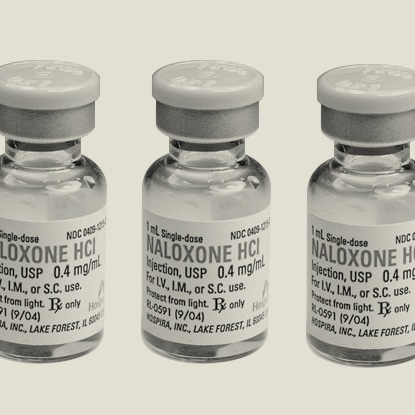
    How much does it cost to save a life? That question got a clear and striking answer this week in the case of overdose from heroin in the United States. A study published in the Annals of Internal Medicine found that distribution of the overdose antidote naloxone—a safe, non-abusable, and inexpensive medicine—to one in five heroin users in the United States could prevent as many as 43,000 deaths. The cost of distribution would be equivalent to some of the cheapest, most effective, and most accepted medical interventions, like checking blood pressure at a doctor’s office.

    The study used mathematical modeling to assess whether giving out naloxone was “worth it”—that is, to determine how much naloxone distribution would cost per “quality-adjusted” year of life gained. This is the measure used by economists and policymakers to compare health interventions and decide which ones are affordable. The naloxone study also investigated assumptions that patient advocates would rather not acknowledge—like whether it would be cheaper to let illegal drug users die, or to put them in jail. Those are ugly questions, but ones that certainly run through the minds of opponents of health services for drug users worldwide. The answer was that naloxone saves lives with costs far below what health or prison systems pay. For example, screening for cancer with colonoscopy costs over $50,000 per quality adjusted life year gained in the United States, and screening for HIV costs around $40,000.

    Naloxone distribution saves lives for as little as $400.

    The other question, of course, is whose lives are deemed worth saving. Drug overdose now kills more adults a year in the United States than motor vehicle accidents, or deaths from choking or accidental falls. Most of us have seen safety messages related to driving, choking, or minding our step, but naloxone and other measures to prevent overdose remain unknown to many at risk. As noted in an editorial in the same journal, co-authored by officials from the National Institute on Drug Abuse and the FDA, making new and easy-to-use formulations of the medicine can help. However, action can be taken now to make the medicine available to heroin users—actions that will prevent thousands of needless deaths, and spare family and friends who may have to watch helplessly as their loved ones stop breathing.

    – Daniel Wolfe

    Daniel Wolfe is director of the International Harm Reduction Development Program at the Open Society Foundations. This blog post was originally published on the Open Society Foundations website.

  • Drug Policy Leaders Honoured with Diamond Jubilee Award

    Drug Policy Leaders Honoured with Diamond Jubilee Award

    At an event to be held at Simon Fraser University’s Harbour Centre Campus this evening, Senator Pierre Claude Nolin will award sixteen individuals from British Columbia’s drug policy reform community with the Queen’s 60th Anniversary Diamond Jubilee Medal.

    Among the recipients are the Canadian Drug Policy Coalition’s Executive Director, Donald MacPherson, and steering committee members Philippe Lucas and Gillian Maxwell.

    “All of these recipients have worked to improve public health in their community. They have dedicated many years of their lives to participate in the implementation, evaluation and construction of programs to help those struggling with addictions or health issues to connect with the services and medication they need,” said Senator Nolin. “They have worked with municipal, provincial and federal governments to advance critical public health programs, and such work is indispensable to our nation as a whole.”

    In lieu of the Senator’s absence due to medical appointments, the event will be presided over by Philip Owen, former Mayor of Vancouver, and Senator Yonah Martin, who will present the medals.

    The event will also feature a special tribute to Irene Goldstone, former Director, Professional Education and Care Evaluation at the BC Centre for Excellence in HIV/AIDS.

    Full list of recipients:

    Donald MacPherson, Bud Osborn, Liz Evans, Dean Wilson, Maxine Davis, Gillian Maxwell, Ann Livingston, Philippe Lucas, Rielle Capler, Kirk Tousaw, John Conroy, David Bratzer, Dr. Evan Wood, Dr. Thomas Kerr, Hilary Black, Mark Haden.

  • The Insite Story: Transforming Health Care Services through Leadership, Risk Tolerance and Innovation

    The Insite Story: Transforming Health Care Services through Leadership, Risk Tolerance and Innovation

    It has been said that “an essential aspect of creativity is not being afraid to fail.” A PricewaterhouseCoopers’ survey conducted among the Times 1000 leading companies found that one of the common characteristics among the most innovative companies is that they take a balanced view of risk-taking behaviours. But a recent Conference Board of Canada survey conducted among Canadian health care executives confirmed that Canadian health care leaders have low tolerance for risk. Boards are perceived to be more risk-averse than executive teams by a fairly wide margin. As seen in the chart below, 57 per cent of respondents agreed or strongly agreed that their executive teams are risk-tolerant, compared to the 37 per cent who agreed or strongly agreed that their boards are risk tolerant, a difference of 20 points.

    blog-121812-2At a recent meeting of the Centre for the Advancement of Health Innovations in Vancouver, Insite, North America’s first legal supervised injection site for drug users, exemplified the importance of adopting a balanced approach towards risks. Insite’s leaders have taken bold actions, many of which carried significant risks, to implement innovative and transformative health care services.

    Insite was created to provide needed services to a population group that has suffered social stigma, abuse and social exclusion in Canada: drug-addicts. Before Insite, there were very few effective solutions to protect drug users from HIV and drug overdose but Insite has changed this reality.It offers clean injection supplies, withdrawal management support, detoxification areas and transitional recovery housing. A team of mental health workers, counsellors, nurses and physicians work with people with drug addiction to educate, intervene when necessary, plan a path to recovery and assist with re-integration in the wider community.

    And the results are outstanding: thirty-three per cent of Insite users are more likely to go to detox if they use the site once a week; 70 per cent are less likely to report syringe sharing, thus reducing HIV risk behaviour; and fatal overdoses within 500 metres of Insite decreased by 35 per cent after the facility opened compared to a decrease of 9 per cent in the rest of Vancouver. The benefits also extend to the heath care system and society: it has been estimated that supervised injection can save $14 million and 920 life years over 10 years due to a reduction in HIV, hepatitis and other medical interventions.

    Despite these proven benefits, Insite has had to fight legal battles to prove legitimacy. In 2006, the federal government deferred the decision to extend Insite’s special exemption from the Controlled Drugs and Substances Act, citing a lack of evidence to support the benefits of supervised injection. In a brave demonstration of leadership, Insite’s supporters took the matter to the Supreme Court of Canada, which in 2011, ruled unanimously to uphold Insite‘s exemption, allowing the facility to stay open indefinitely. Over the past nine years, more than one million injections have taken place at Insite under supervision and with clean equipment. It is the busiest supervised injection site in the world with over 1,200 visits every day.

    Insite’s leaders did not run away or gave up on their vision when the many obstacles appeared; they relentlessly focused on implementing change and appropriately and effectively managing the risks associated with a program of this nature. And these efforts have paid off: by partnering with the local health authority, Insite has been able to effectively bringing innovative health care services to marginalized populations who were previously unreachable.

    The program continues to work with low-income people to bring more opportunities for this hard-to-reach population to control their addictions and access effective, culturally appropriate chronic disease management and disease prevention programs. Insite’s daring leaders were not paralyzed by fear of failure. They are transforming health care services by demonstrating that the “best health care solution lies in treating all people humanely”.

    – Jeannette Lye

    Jeannette is a graduate of the School of Public Administration at Dalhousie University and in addition holds a Master of Science in Cultural Psychology from Brunel University and an undergraduate degree in psychology from Acadia University. This blog post was originally published on ConferenceBoard.ca

  • Breaking the Taboo

    Breaking the Taboo

    The CDPC is proud to join together with the Beckley Foundation, Virgin Unite, Sundog Pictures, Avaaz.org, The Global Commission on Drugs, and civil society NGO’s from around the world in calling for a fundamental review of global strategies in response to drugs.

    Breaking the taboo is a bold new international challenge. At the heart of the initiative is a groundbreaking documentary film that uncovers the UN sanctioned war on drugs, charting its origins and its devastating impact on countries like the USA, Colombia and Russia. Narrated by Morgan Freeman and featuring prominent statesmen including Presidents Clinton and Carter, the film follows The Global Commission on Drug Policy on a mission to break the political taboo and expose the biggest failure of global policy in the last 50 years.

    www.breakingthetaboo.info

    We encourage you to get involved, read the Beckley Foundation letter, sign the AVAAZ Campaign, and join the conversation on twitter using the hashtag #breakingthetaboo.

    Global commissioner on drug policy Richard Branson hopes “this film will open people’s eyes on the war on drugs and the failed war on drugs and make it easier for people who want to be brave and do something about it.” Among those featured are Colombian president Juan Manuel Santos and former US president Bill Clinton, who admits bluntly that the US-led war on drugs in Colombia “hasn’t worked”. Clinton also talks about the need for rehabilitation rather than incarceration when dealing with people with addictions. Sir Richard said countries such as Portugal and Spain, where drug users receive treatment rather than being jailed, provide a template. He believes that legalisation of cannabis is “inevitable”. “I have hardly ever come across a politician that won’t say – off the record – what needs to be done … in the end they just need to be brave,” he said.

  • Réseau juridique canadien VIH/sida

    Réseau juridique canadien VIH/sida

    L’épidémie du VIH est l’un des problèmes de santé publique les plus brûlants de notre époque. Il a déjà semblé être insurmontable, mais il a reçu l’assistance de l’éducation, la recherche, l’innovation, et une incommensurable quantité de travail. Les outils destinés à freiner la propagation du VIH et à améliorer la vie et la santé des personnes vivant avec la maladie sont désormais offerts à plus grande échelle, mais la possibilité de donner le jour à une génération sans sida se heurte encore à un certain nombre d’obstacles, dont la plupart ont trait aux droits de la personne latents, à l’accès aux médicaments, à la réduction des méfaits, et à des lois injustes.

    L’un des groupes les plus prolifiques qui travaillent à résoudre les problèmes qui entravent présentement la lutte contre le VIH/sida est le Réseau juridique canadien VIH/sida de Toronto. Célébrant en décembre le 20e anniversaire de ses activités, le Réseau juridique canadien VIH/sida est la principale organisation canadienne de défense vouée aux questions juridiques et de droits de la personne qui relèvent du VIH/sida. La mission du réseau est de faire valoir les droits humains des personnes vivant avec le VIH/sida et vulnérables à l’épidémie, au Canada et dans le monde, à l’aide de recherches et d’analyses, de plaidoyer et d’actions en contentieux, d’éducation du public et de mobilisation communautaire.

    L’une des questions qui préoccupe présentement le Réseau juridique est celle des échanges de seringues dans les prisons canadiennes. L’échange de seringues est essentiel à toute stratégie globale visant à prévenir la propagation des maladies infectieuses, mais la distribution de matériel d’injection stérile n’est actuellement autorisée dans aucune prison canadienne — malgré les preuves massives des avantages des programmes d’échange de seringues en prison (PESP) qui ont cours dans le monde entier.

    Pour contester cette politique, le Réseau juridique canadien VIH/sida, le Réseau d’action et de soutien des prisonniers et prisonnières vivant avec le VIH/sida (PASAN), CATIE, le Réseau canadien autochtone du sida (RCAS) et Steven Simons, ancien détenu sous responsabilité fédérale, ont engagé des poursuites contre le Gouvernement du Canada, le 25 septembre, pour « son défaut de protéger le droit à la santé des détenus, dû à son refus persistant de mettre en œuvre des programmes de seringues stériles pour prévenir la transmission du VIH et du virus de l’hépatite C (VHC) dans les établissements correctionnels canadiens ».

    Les taux d’infection à VIH et à VHC chez les détenus canadiens sont de 10 à 30 fois supérieurs à ceux de l’ensemble de la population. Bien que l’usage de drogues illicites soit strictement interdit dans les établissements correctionnels, la prévalence de cet usage est un fait indéniable.

    Bien que la question de donner accès aux détenus à du matériel d’injection stérile puisse sembler paradoxale à première vue, elle est en fait assez évidente, étant donné la preuve écrasante que les PESP bénéficient à la santé des détenus, puis à l’ensemble de la santé publique.

    Pour plus de détails sur la poursuite et les PESP, allez au site Web du Réseau juridique canadien VIH/sida pour consulter la campagne – Urgence santé en prison.

    Outre les affaires directement liées aux politiques sur les drogues, comme les PESP, le Réseau juridique canadien VIH/sida traite de thèmes comme la discrimination, les communautés autochtones, les droits des femmes, le travail sexuel, la sécurité du revenu, et ainsi de suite (cliquez ici pour la liste complète).

    Les campagnes et activités courantes sont notamment :

    Femmes et séropositives : Dénonçons l’injustice

    Documentaire de 45 minutes qui raconte les histoires vécues de quatre femmes séropositives,Femmes et séropositives : Dénonçons l’injustice dépeint la réalité de la criminalisation de la non-divulgation du VIH au Canada.

    Pour plus de détails, consultez le site Web du film.

    La non-divulgation du VIH et le droit criminel

    Le 25 octobre, le Réseau juridique a lancé plusieurs publications qui analysent deux décisions récentes de la Cour suprême concernant des causes de non-divulgation du VIH. Un résumé et une analyse approfondie des décisions se trouvent ici.

    Tenir la promesse du Canada : des médicaments  abordables pour tous

    Depuis nombre d’années, le Réseau juridique mène une campagne mondiale pour rectifier le Régime canadien d’accès aux médicaments (RCAM), qui permettrait au Canada d’assurer aux pays en voie de développement un meilleur accès aux médicaments génériques abordables pour le sida et d’autres problèmes de santé. Le projet de loi C-398 est au cœur de cette campagne, et s’il est adopté, il corrigera et simplifiera le RCAM, permettant ainsi d’acheminer les médicaments à ceux qui en ont besoin.

    Pour plus de détails sur le projet de loi C-398, allez au site du Réseau juridique canadien VIH/sidasite Web médicaments pour tous.

    Le 4 décembre 2012 à 19 h 00, philanthropes, bailleurs de fonds, membres, organismes communautaires, personnes vivant avec le VIH/sida et alliés se réuniront dans la Grande Salledu Barreau du Haut-Canada à Toronto pour célébrer le Réseau juridique canadien VIH/sida et rendre hommage aux lauréats des Prix 2012 de l’Action contre le VIH/sida et pour les droits humains. Cliquez ici pour plus de détails sur l’activité.

    Le Réseau juridique canadien VIH/sida est partenaire de la Coalition canadienne des politiques sur les drogues, visant le changement et de meilleures politiques sur les drogues fondées sur les données probantes, les droits de la personne, l’inclusion sociale et la santé publique.

  • Bud Osborn: Drug War Poems & DTES history

    Bud Osborn: Drug War Poems & DTES history

    Bud Osborn’s prose charges drug policy debates with deep revelations and compassion. As a long time poet and social activist living in Vancouver’s Downtown Eastside, Bud is a light for many. His evidence is wrapped in poetry that can only come from first hand experiences. He turns the suffering he sees into poignant words aimed at shattering the paradigm of prohibition.

    At an epicenter of the war on drugs in Canada, the residents of the Downtown Eastside have long known the harms of prohibition. On September 22, 2012 the community gathered under a tent at Oppenheimer park for a day of open dialogue and discussion and food. After the acknowledgment and welcoming to Coast Salish Territory, Bud opened the day with this poem on the drug war and the story of the neighborhood. Please share this video and let his words inspire more discussion and change. Together we can build a future of collective self-determination and social justice.